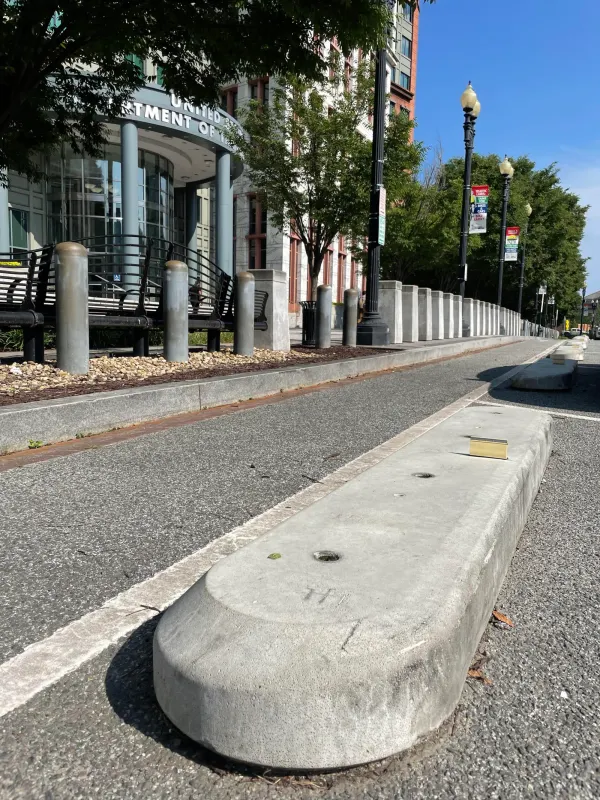
The missing links between Complete Streets and a safe system.

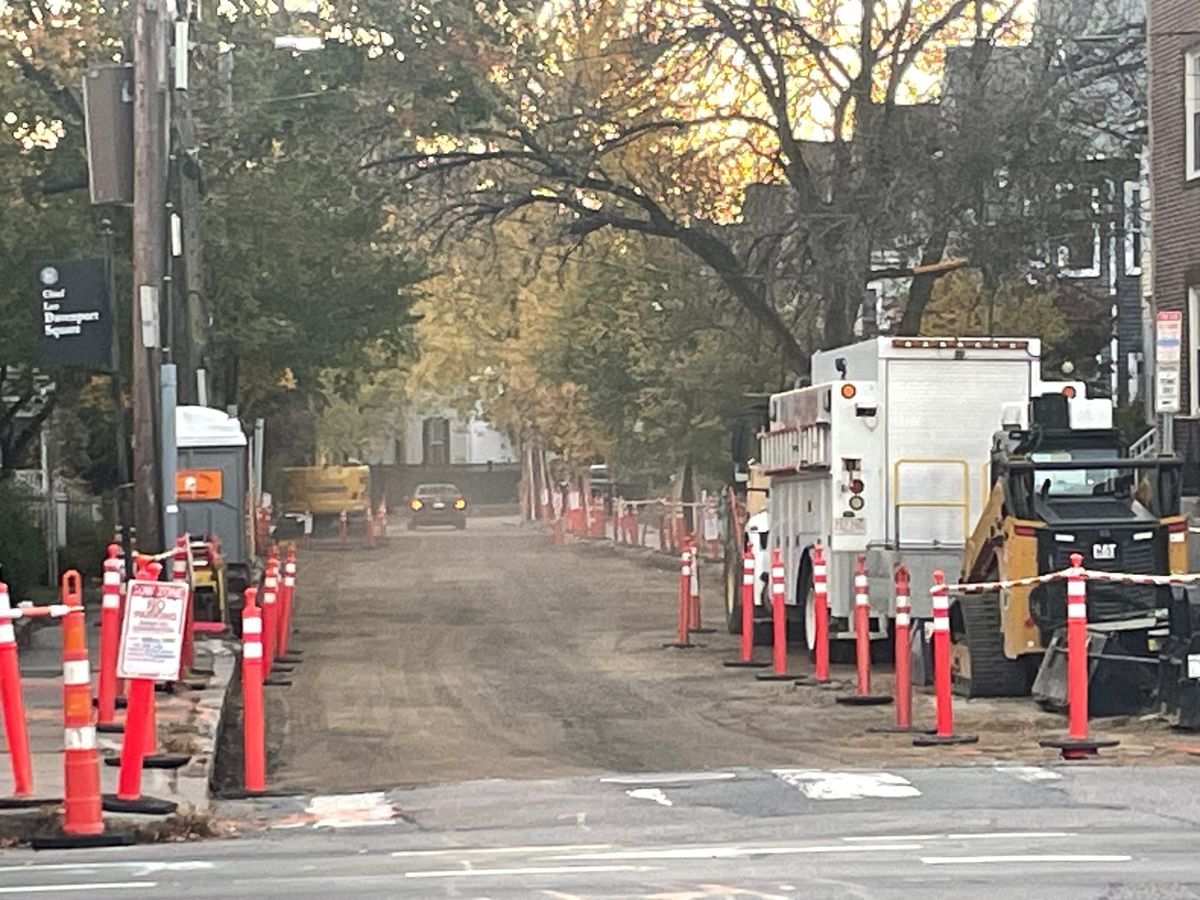
A few weeks ago, my city repaved a single block of local street that leads directly to my daughter's school. This was not a relatively simple mill-and-overlay: They replaced some manholes, reset some crooked granite curbs, regraded the whole stone sub-base, and then repaved it. The exact same street design that came out went back in, only much smoother (and faster – degraded pavement is super-effective traffic calming).
There was/is nothing glaringly wrong with this street: It is a 500-foot single block of a one-way, one-lane low-volume local street, with parallel parking on both sides. If our circa-2017 Vision Zero Action Plan had defined a High-Injury Network, this street would definitely NOT appear on it. It already ends in a raised intersection bordering the school. It is difficult to pin down exactly what could or should have been changed. But once a street gets focused high-effort maintenance attention like this, it normally goes to the back of the line for any other changes for a generation.
What could they have done? They were required to remediate noncompliant accessibility features, and didn't, so... that is a big obvious miss. But from there, we move from "What they had to do" to what "They could or should have done." How do we decide what they could or should have done?
The theoretical ideal of Complete Streets raises expectations for this sort of work. Every time a street gets touched, it is an opportunity to rethink how it looks, how it operates, and most importantly, who it serves. In this case, one might ask how the street could work better for elementary and middle school students walking and bicycling to the adjacent school.
While we focus a lot of attention on major corridor reconstructions and network plans for retrofits, the repaving program is the most common non-routine work on our streets, and is a prime opportunity to implement changes. After all, the permitting, staging, maintenance of traffic, demolition, and cleanup for a work site is already handled. There are no leftover pavement cuts associated with curb work. There is very little marginal cost to putting markings back in that differ from the old ones. In the case in my pic above, all of the asphalt was removed and the underlying structure of the street was regraded, so the possibility was there for cheaply moving curbs and other more complex changes. Putting back in exactly what came out is an opportunity missed.
A complementary concept to Complete Streets is the Safe Systems Approach. As my FHWA Office of Safety colleagues used to say "Vision Zero is the goal, the Safe System Approach is how we get there." True to its name, the Safe System Approach emphasizes system-level changes, and taking a swiss-cheese approach to risk reduction, where multiple layers of protection mean that inevitable failures in one level of protection do not result in harm. The relevant parts of the Safe System Approach to the question of what to do with street design are the Safer Streets and Safer Speeds strategies. Through design, we can both improve the direct safety features of the street (sightline improvements, more prominent markings, separating users) and encourage lower speeds (all of the many methods of traffic calming).
While most communities pursuing Vision Zero emphasize the need to address their High-Injury Network, this is simply a prioritization exercise, rather than an attempt to define the entire scope of the safety "problem." It is an attempt to focus attention on where the most urgent proactive attention is needed. However, severe injuries and fatalities also occur with some degree of apparent randomness across the system. Working on the High-Injury Network is not the only street safety design task. Creating a safe system requires work across the entire system. Every time the street gets touched, and nothing changes, that is a potential opportunity missed.
I participated in a discussion among practitioners recently about these issues, and I shared some thoughts about how to lessen those missed opportunities, and strengthen the translation from good-intentioned policy to reliable and efficient implementation. As with many such things, I believe that degree of standardization is needed – planning out what can be done routinely, what exactly it looks like, how it can be done.
It starts with a plan/policy that states plainly that the standard for the type of street being repaved, retrofitted, or reconstructed should include certain things. In one community I worked in, we specified a modest change that more prominent stop lines be set further back from crosswalks. Boston (before its Wu-turn on street safety) once planned to widely install widespread speed humps on local streets by default, without cumbersome speed studies or resident petitions. Hoboken famously deploys widespread quick-build daylighting barriers to keep sightlines clear. Washington DC requires sidewalks (and sometimes raised crosswalks and intersections). The Netherlands standardized the famous woonerf, or "residential yard" street. When we decide on a standard for our streets, we remove a whole lot of wasteful and unproductive street-by-street decision-making about exactly what to do (or not). Let's fight those fights at the network scale, so that we can implement efficiently at the block level.
The standardization continues with design details. It is great to say that speed humps should exist on every local street block longer than 200 uninterrupted feet. It is even better to provide a standard drawing showing the preferred slope and length of those speed humps. It is great to say that flexpost curb extensions will be installed on the approaches to intersections. It is even better to specify the standard markings and curb radii for all combinations of street type intersections. Washington DC's mammoth Design and Engineering Manual was my introduction to the value of standardization. None of this is intended to entirely remove the judgment of engineers and planners or the consideration from the process or context; but rather, to allow them to bring their judgment to a starting set of assumptions that fit most cases, so that we can let the construction crews cook.
When we decide what we want to do with our streets, and exactly h0w we are going to do it, we can take advantage of multiple programs to make the improvements. Most notably, the repaving program. Oakland, CA plans out its repaving schedule years in advance, to allow for implementation of a wide range of retrofitted roadway changes. Fairfax County, VA, uses the Commonwealth's aggressive repaving program as the delivery mechanism for almost all street retrofits of bike lanes and crosswalks.
Vision Zero is the goal. The Safe System Approach is how we get there. Planning out what we want to do with our streets, exactly h0w we are going to do it, and using every opportunity to change our streets is how street owners can fulfill their responsibilities in the Safe System Approach with scarce resources.
That street near my kid's school could have and should have been built back better.